
Removing a wasp nest can go wrong very quickly. I used a bee vacuum on a huge nest hidden inside a woodpile, but the nest ran far deeper into the logs than I expected. The battery died, the vacuum lost pressure and the wasps made it very clear that they weren’t happy.
This guide shows what happened, what I found inside the log and why this is behind-the-scenes footage rather than a job to copy at home.
In this guide
- Why the wasp nest had to be removed that day
- How I used a bee vacuum to reduce the number of flying wasps
- What happened when the battery died and the suction dropped
- What the nest looked like inside the log
- How to protect your beehives when wasp pressure builds
Concealed wasp nests can be dangerous, especially when power tools are involved. This is not a step-by-step removal guide. Wear proper protection and contact a professional pest controller if you’re unsure.
Why this wasp nest had to be removed
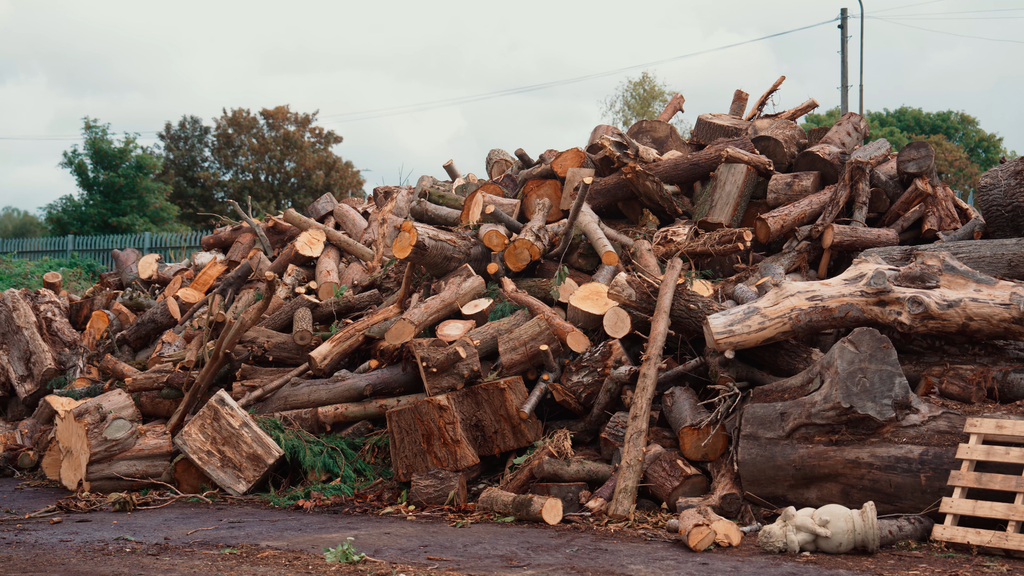
A friend needed a huge pile of logs moved that day. The problem was that at least three wasp nests were hidden inside it.
The main nest was exactly where the work needed to happen. Leaving it alone would put the person moving the timber straight into the flight path of a very active colony.
I was nervous before I started. I don’t particularly enjoy working with wasps, and one hit me near the eye while we were looking for the entrances. That was a useful warning. The nest was active, well hidden and much bigger than it looked from the outside.
The equipment I used
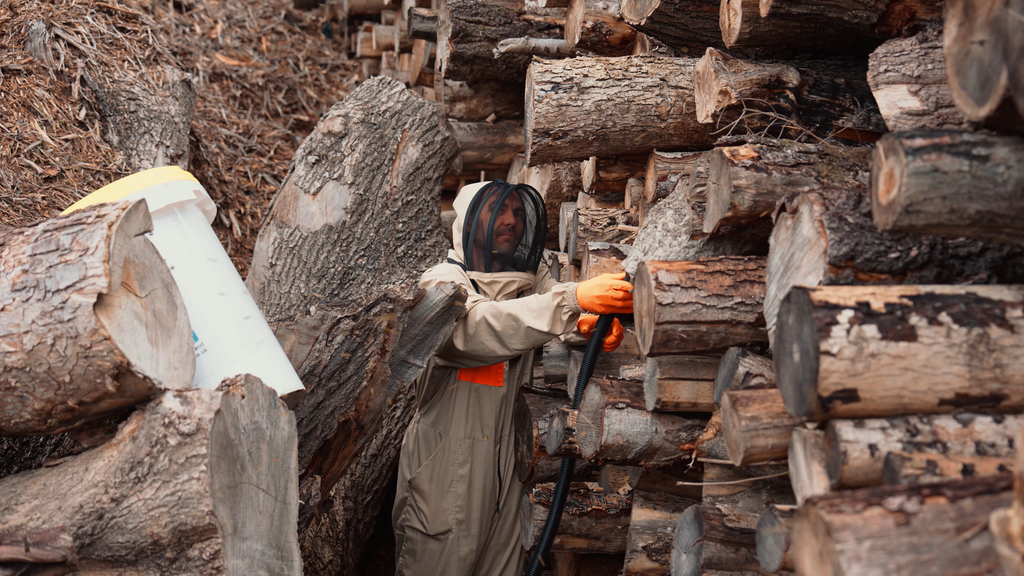
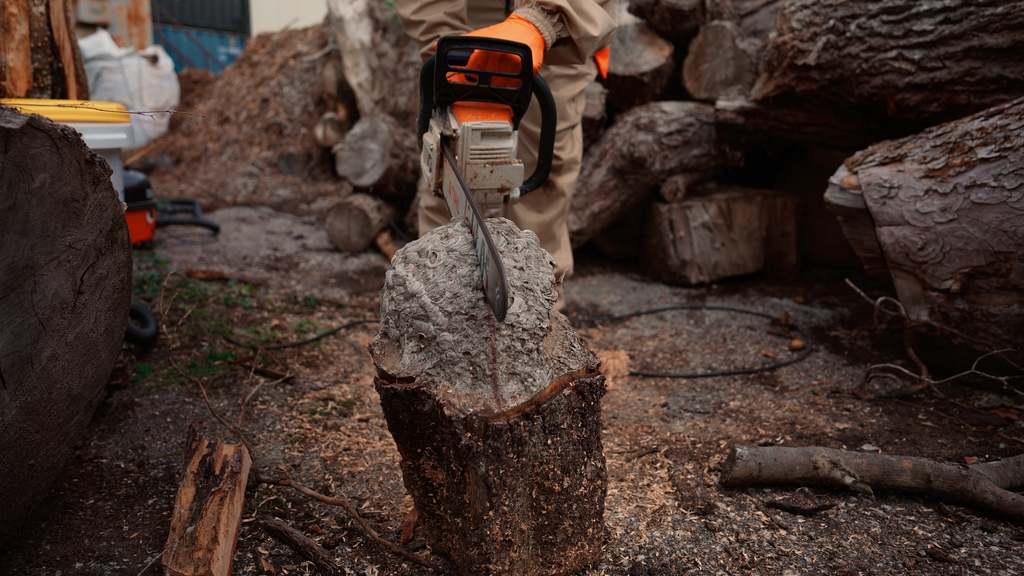
I wore a full bee suit and veil. I also brought a smoker, a bee vacuum and a chainsaw so the section of timber containing the nest could be removed.
A bee vacuum is designed to draw insects into a container without the violence of an ordinary workshop vacuum. In this job, I used it as a wasp vacuum to reduce the number of adults flying around the nest entrance.
The plan looked simple enough. Vacuum as many wasps as possible, remove the section of log containing the nest, then open it somewhere safer.
The nest had other ideas.
Removing a wasp nest with a bee vacuum
The moment I started working near the entrance, the wasps became defensive. More of them came out as the nest was disturbed, so I kept the bee vacuum running and worked from as much distance as the site allowed.
The visible entrance gave no clue how far the nest travelled into the timber. Once I cut away the first section, the comb carried on. I removed another piece and still hadn’t reached the end.
This was a wasp nest inside a log, not a neat ball hanging in the open. The wood protected it and hid most of its size.
You can watch the full wasp nest removal to see how quickly the job changed.
How deep the wasp nest went into the log
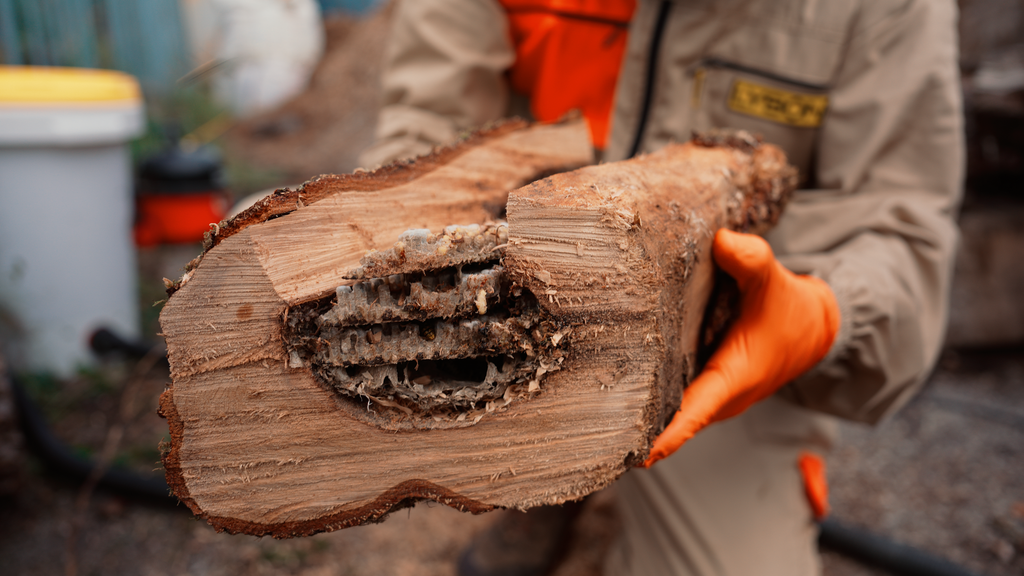
The nest tunnelled through several sections of timber. Each cut exposed more layered comb, and the final section sat deep inside the darkest part of the log.
That protected space also held several large wasps that appeared to be queens preparing to leave and overwinter. I’m not a wasp expert, so I wouldn’t use this footage to identify every insect or make a firm claim about the colony. What I could see was a mature nest with far more structure than the outside entrance suggested.
Once most of the flying wasps had left the section, I cut through the timber to reveal a cross-section of the nest. The paper layers followed the shape of the hollow inside the wood.
[image: cross-section of the wasp nest inside the log]
It was an incredible structure. I can be scared of wasps and still marvel at what they build.
What the nest taught me about wasps
Wasps aren’t insects I want attacking me, but I don’t see them as villains. They are impressive animals and their nests are extraordinary.
The problem for beekeepers starts when wasp pressure builds around weaker colonies. Wasps test entrances and take advantage when a colony cannot defend its space. That pressure needs managing before it turns into a full attack on the hive.
Removing a distant nest is not the first answer to every wasp problem. The practical priority is protecting your colonies and reducing the opportunities that draw wasps towards them.
Protect your beehives from wasps
If wasps are testing your colonies, check the apiary rather than waiting for the pressure to get worse.
- Make sure weaker colonies are not being left with more entrance space than they can defend.
- Avoid leaving exposed syrup or feed around the apiary.
- Watch for repeated wasp activity at entrances.
- Act early when a colony is struggling to defend itself.
- Get professional help with a dangerous or concealed nest.
The exact response depends on the colony, the site and the level of pressure. This footage shows why nest removal can become dangerous. It doesn’t replace a proper assessment.
Get the free Wasp Survival Kit
If your real problem is wasps attacking your beehives, download my free Wasp Survival Kit. It gives you practical help to protect your colonies before wasp pressure takes over.